Varicose Veins.
Bulging, twisted, achy veins are treatable in a single office visit. Several minimally invasive options. Most patients return to normal activity within 48 hours.
- 30 to 45minutes per session
- Localanesthesia, no general
- Outpatientno overnight stay
- 1 to 2 daystypical recovery
What are varicose veins?
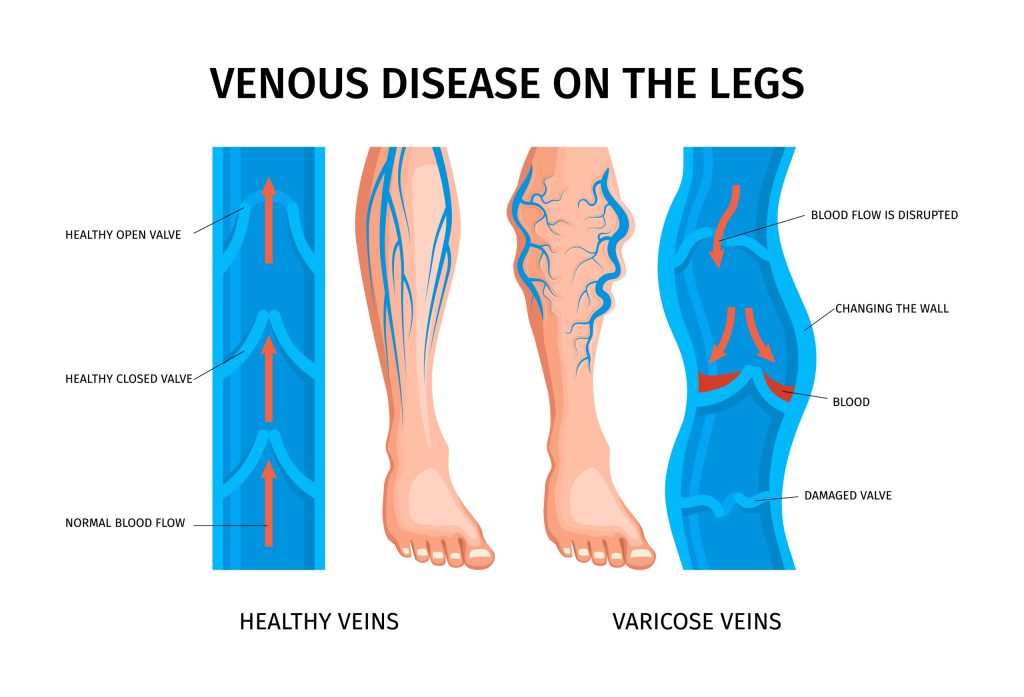
Varicose veins are large, ropy veins that twist through your legs. Usually quite prominent on the surface. In addition to their unattractive appearance, they can cause uncomfortable and difficult symptoms.
If you do not get treatment for varicose veins, they can grow much worse, potentially extending to the deep veins that act as a main pathway to relay blood back to your heart. This leads to blood pooling in all your leg veins, potentially causing:
- Leg pain
- Leg swelling
- Itchy skin
- Discolored skin (skin pigmentation changes like darkening)
- Achy legs
- Leg cramps
- Leg ulcers
A real reason not to ignore them.
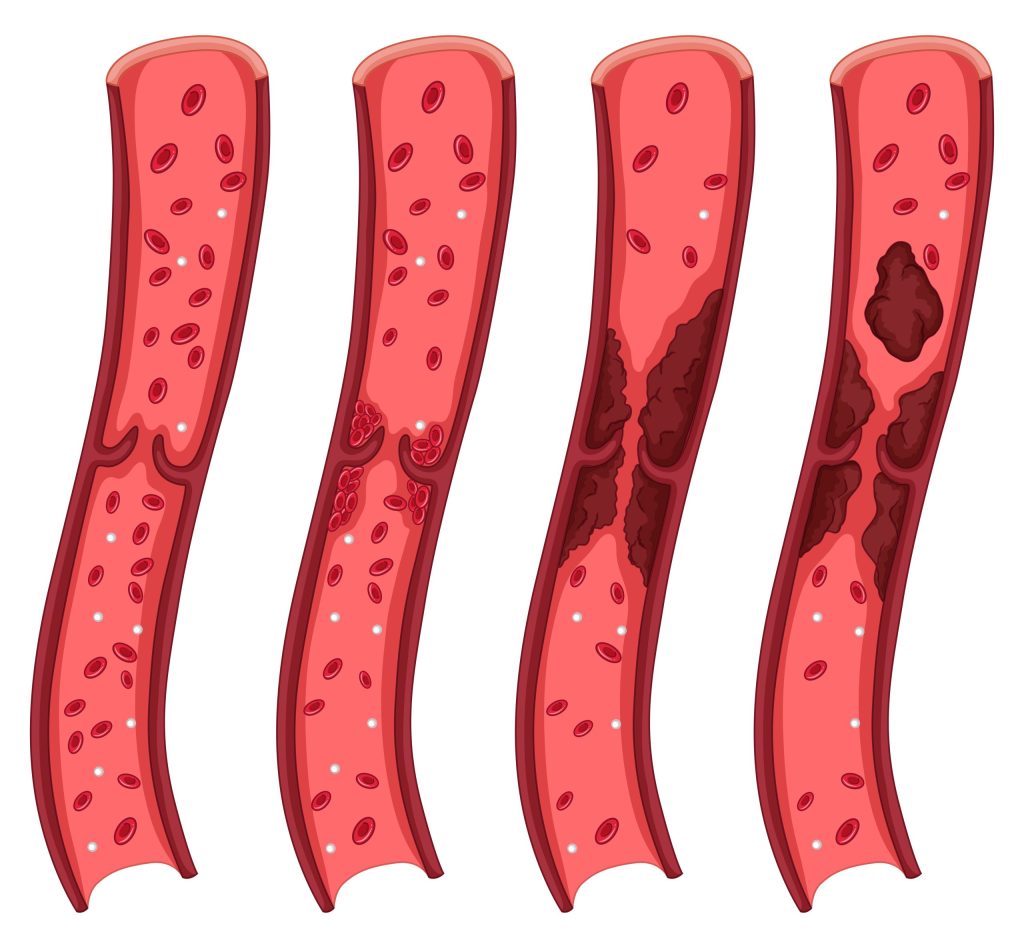
If you have varicose veins you are more likely to develop deep vein thrombosis, a potentially life threatening condition in which a blood clot forms in one of your deep veins. Although DVT is rare, it is important to speak with your Advanced Vascular specialists to understand your personal risk level and how you can take steps to prevent it.
- Pain or aching legs
- Swelling
- Skin discoloration (brownish patches)
- Itching or burning over the vein
- Ulcers, especially around the ankles
- Blood clots (deep vein thrombosis, DVT)
It usually starts with venous reflux.
When your vein valves stop working efficiently, blood flows back down into your legs rather than up to the heart where it should. Untreated, this can become chronic venous disease.
The main underlying cause of vein disease, including varicose veins, is venous reflux. If you have venous reflux, your vein valves do not work efficiently. Blood flows back down into your legs rather than up to the heart.
If untreated, venous reflux may eventually cause chronic venous insufficiency, also known as chronic venous disease. You can develop varicose veins and the troublesome symptoms that go with them.
Certain factors can increase your risk:
- Aging
- Being female
- Being obese
- Smoking
- Standing for long periods
How we treat varicose veins.
Conservative care, exercise, weight loss, and compression hosiery can reduce certain symptoms, but those measures do not treat the veins themselves. We use minimally invasive procedures that are faster, easier, and considerably less painful than the surgical techniques of the past.
-
01
Radiofrequency Ablation
Heat closes the diseased vein. Outpatient, local anesthesia, walk in walk out.
-
02
VenaSeal
Medical adhesive seals the vein. No heat. No tumescent anesthesia. Twenty to forty minutes.
-
03
Ultrasound guided sclerotherapy
An injectable foam closes the vein from the inside. Used alone or alongside other procedures.
-
04
Laser Ablation
Endovenous laser energy closes the diseased vein through a small catheter. Outpatient, local anesthesia, walk in walk out.
-
05
Varithena
A prescription foam fills and closes the vein through a catheter or a small injection. No incisions needed.
What happens at your first appointment.
Most people who call us have been living with heavy, aching legs for years and have never been told what a vein consultation actually involves. Here is the whole thing, start to finish. Plan on about an hour in the office.
-
01
We listen first
Dr. Satyaki Banerjee goes through your symptoms, your history, and what your legs feel like at the end of a long day on your feet. Bring your insurance card and a list of your current medications.
-
02
Duplex ultrasound
A painless scan maps the blood flow in your leg veins and shows which valves are leaking. Nothing is injected and no needles are used. It takes roughly thirty minutes and it is what separates a real diagnosis from a guess based on appearance.
-
03
A plan, in plain language
You see your own ultrasound on the screen, hear which veins are causing the problem, and leave with a treatment plan and the coverage question addressed before you commit to anything.
Why choose Advanced Vascular?
- ·
Relief from symptoms. Less aching, swelling, heaviness, and night cramping.
- ·
Prevent progression. Catch the underlying venous reflux before it becomes chronic venous disease.
- ·
Quick recovery. Most patients return to normal activity within 24 to 48 hours.
- ·
Insurance often covers it. Medically necessary vein treatments are covered by Medicare and most major insurance.
- ·
Improved leg appearance. Visible varicose veins fade as the body absorbs the closed vein.
Is varicose vein treatment covered?
This is the first question almost every patient asks. The honest answer is that it depends on whether your veins are causing medical symptoms or are purely a cosmetic concern. Here is how coverage usually works in New Mexico.
Medically necessary treatment is generally covered. When varicose veins cause pain, swelling, skin changes, bleeding, or ulcers, Medicare and most major commercial plans treat vein ablation as a medical procedure rather than a cosmetic one. What you owe still depends on your specific plan.
Purely cosmetic treatment usually is not. If the veins cause no symptoms and the ultrasound shows no reflux, insurers typically consider treatment elective. Small surface spider veins often fall into this category.
Many plans require a trial of conservative care first. It is common for an insurer to ask for a documented period of compression stockings, often six to twelve weeks, together with an ultrasound showing venous reflux, before it will approve an ablation. That clock does not start until you are seen, which is the practical reason not to put the consultation off.
What you actually pay comes down to your plan. Your out of pocket amount depends on your deductible, your coinsurance, and how much of them you have already met this year. Two people can have the identical procedure and owe very different amounts, which is why we do not publish a single price for varicose vein treatment.
Bring your insurance card to your consultation and we will go through your benefits with you before anything is scheduled.
Chronic venous insufficiency is a progressive condition. Waiting rarely makes either the symptoms or the coverage conversation easier.
What recovery actually looks like.
Older vein stripping under general anesthesia meant weeks off your feet, and that reputation still keeps people away. Modern ablation is nothing like it. You walk out of the office the same morning and most patients drive themselves home.
- ·
The same day. You walk immediately afterward, and walking is encouraged. Expect a compression stocking on the treated leg and mild soreness along the vein.
- ·
The first 48 hours. Most patients are back to normal daily activity within one to two days. Skip heavy lifting, long hot baths, and hard workouts.
- ·
The first two weeks. Bruising and a firm, tender cord along the treated vein are common and settle on their own. Compression is usually worn for a short period.
- ·
The months after. The closed vein is gradually absorbed and blood reroutes through healthy veins. Aching and heaviness tend to ease first. Changes in appearance come more slowly, and how much they change varies from person to person.
- ·
Follow up. A short ultrasound check confirms the treated vein has closed and that the deep system is healthy.
Treated by Dr. Satyaki Banerjee.
Vein care in Albuquerque is not all the same, and the person holding the catheter matters. Dr. Banerjee is a board certified interventional nephrologist and an ASDIN certified vascular access specialist licensed in New Mexico. He reads your ultrasound with you and performs your procedure himself, in the office, under local anesthesia.
- Board certified interventional nephrologist
- ASDIN certified in vascular access
- Licensed in New Mexico
- Minimally invasive, office based care
- Duplex ultrasound before any treatment decision
- Serving Albuquerque and the surrounding communities
Vein care across the metro.
Our office is in Albuquerque and we treat patients from across the middle Rio Grande valley.
Patients come to us from Rio Rancho, Bernalillo, Corrales, Placitas, Los Lunas, Belen, and the East Mountains, along with every part of Albuquerque from the North Valley to the Foothills. Because treatment happens in the office under local anesthesia rather than in a hospital, most people make the drive, have the procedure, and are home the same morning.
If you are at the north end of the metro, see our pages on vein care in Rio Rancho and vein care in Bernalillo.
Related conditions we treat include venous ulcers, restless legs, and leg pain, cramping and swelling.
Frequently asked questions.
If you have a question we did not cover, the team is happy to walk you through it on the phone.
Varicose veins are enlarged, twisted veins that most commonly occur in the legs and feet due to weakened vein walls and faulty valves. They are often visible under the skin and may appear blue or purple.
Bulging, rope like veins under the skin. Aching, throbbing, or heaviness in the legs. Swelling in the lower legs and ankles. Itching or skin discoloration around the affected veins. Night cramps or restless legs.
We conduct a physical exam and may recommend a duplex ultrasound to evaluate blood flow and check for valve dysfunction or clots.
Most modern treatments are minimally invasive and performed with local anesthesia. Patients typically experience mild discomfort and quick recovery.
When varicose veins cause symptoms such as pain, swelling, skin changes, bleeding, or ulcers, Medicare and most major commercial plans treat the procedure as medically necessary rather than cosmetic. Many plans also require a documented trial of compression stockings, often six to twelve weeks, plus an ultrasound showing venous reflux, before they approve treatment. Purely cosmetic vein treatment is generally not covered.
Because we bill insurance directly, there is no single price. What you owe depends on your plan, your deductible, your coinsurance, and how much of them you have met for the year. Two patients can have the same procedure and pay very different amounts. Bring your insurance card to your consultation and we will review your benefits with you before anything is scheduled.
Most sessions run 30 to 45 minutes, done in our Albuquerque office under local anesthesia. There is no general anesthesia and no overnight stay. Plan on about an hour in the building including check in and the compression stocking being fitted afterward.
Most patients return to normal daily activity within one to two days and many go back to desk work the next day. Walking is encouraged right away. Heavy lifting, hard workouts, and long hot baths are usually put on hold briefly. If your job is physically demanding, tell Dr. Banerjee at your consultation so your plan accounts for it.
A vein that has been closed is absorbed by the body over time and does not typically reopen, and blood reroutes through healthy veins. Venous disease itself is progressive though, so other veins can become affected later, particularly if you have a family history or stand for long hours. Follow up ultrasound checks are how we catch that early.
Untreated venous reflux tends to progress. Over time it can lead to persistent swelling, skin darkening and thickening around the ankle, itching and burning, and in some cases venous ulcers that are slow to heal. Having varicose veins also raises the likelihood of deep vein thrombosis. Not every case progresses quickly, but the condition does not reverse on its own.
Varicose veins
at Advanced Vascular.
Schedule a consultation with Dr. Banerjee. A focused, honest conversation about your options. No pressure.