Chronic Venous Insufficiency.
Weakened vein valves let blood pool in your legs. Dr. Banerjee diagnoses the cause and tailors a treatment plan to restore healthy circulation.
- Up to 35years patients live with CVI untreated
- Ultrasoundthe only definitive diagnosis
- Outpatientminimally invasive treatment
- Most insurancecovers medically necessary care
What is chronic venous insufficiency?
Chronic venous insufficiency occurs when the veins in your legs weaken, preventing blood from flowing properly and causing it to pool. At Advanced Vascular, Dr. Banerjee specializes in diagnosing this condition and providing personalized treatment options to improve your vascular health.
Your veins contain small valves that help direct blood flow toward your heart. Chronic venous insufficiency occurs when these valves and the walls of your veins weaken, impairing circulation. As a result, blood may move more slowly, flow backward, or collect in certain vein segments. Although it can develop anywhere in your body, it is most commonly found in the legs.
Several factors increase your risk of developing chronic venous insufficiency. As you age, your vein valves naturally become weaker. This risk is heightened if you spend many hours each day sitting still or if your job requires standing for extended periods.
Deep vein thrombosis, a condition where a blood clot forms in a deep vein, also plays a role in the development of this condition.
Living with CVI too long?
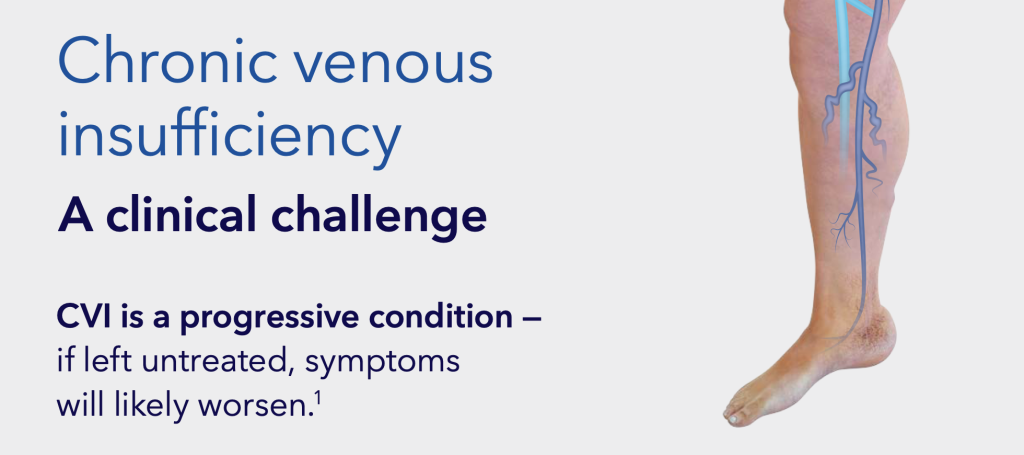
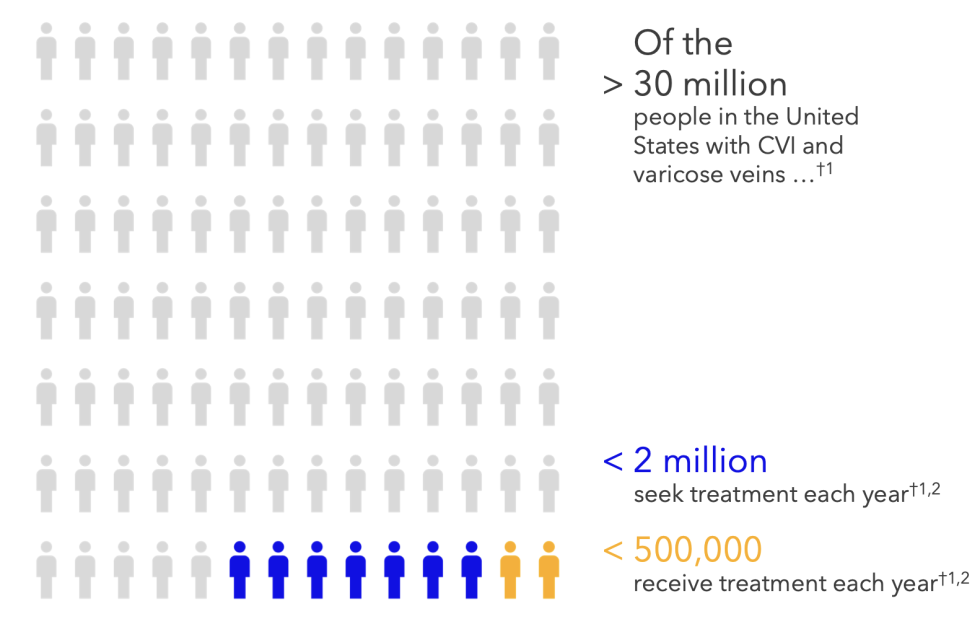
Most patients with CVI remain undiagnosed and untreated. It is estimated that people live with CVI for up to 35 years before seeking treatment. Early intervention helps prevent complications like venous ulcers and skin changes that become harder to reverse over time. Where CVI sits in the left leg and does not respond as expected, we also check for May Thurner syndrome, a compression of the iliac vein that can drive the same symptoms.
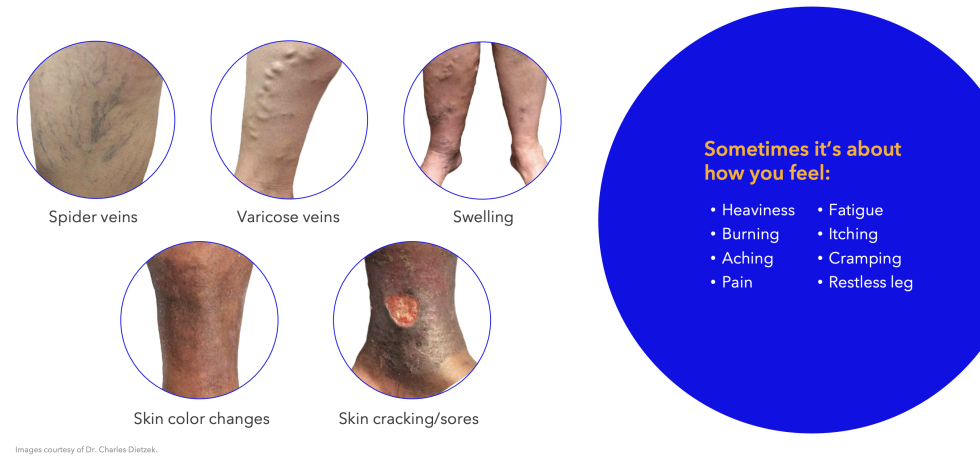
- Leg swelling and heaviness
- Aching, throbbing, or cramping
- Skin discoloration around the ankles
- Itching or burning over the veins
- Open sores or ulcers near the ankle
- Visible varicose veins
How to learn if you have vein disease.
A simple, painless ultrasound is the only way to know for certain whether your symptoms are caused by underlying vein disease. For a plain-English overview first, read what CVI is and the symptoms to watch for.
An ultrasound scan is the only definitive way to diagnose vein disease. A technician uses this test to get an image of the inside of your leg veins. A doctor will review the test results to determine if the valves inside the veins are working properly.
Although insurance coverage varies by individual plan and the severity of disease, most insurance carriers, including Medicare, will cover necessary clinical tests like an ultrasound that are done to help your doctor diagnose or rule out a suspected illness or condition.
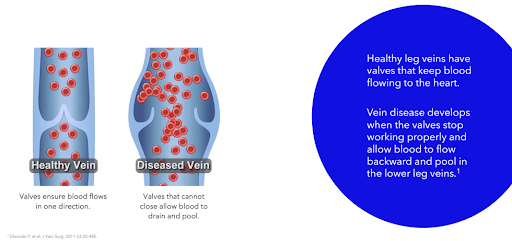
Healthy valves vs. diseased valves.
Healthy leg veins have valves that keep blood flowing to the heart. Vein disease develops when the valves stop working properly and allow blood to flow backward and pool in the lower leg veins.
How did I get it?
CVI usually develops from a mix of genetic and lifestyle factors that put extra strain on your vein valves over time.
Possible genetic and lifestyle risk factors include:
- Gender. Women are more likely to develop the disease.
- Family history of vein disease
- Prolonged standing or sitting
- Age, as vein valves weaken over time
- Pregnancy
- Prior deep vein thrombosis (DVT)
- Obesity
Treatment options for CVI.
Treatment for chronic venous insufficiency depends on how advanced it is, but the main goal is always to improve circulation, reduce swelling, relieve symptoms, and prevent complications like ulcers. We start conservative and escalate only when needed.
-
01
Compression and lifestyle
Compression stockings, elevation, walking, and weight management to reduce pressure on weakened veins.
-
02
Radiofrequency Ablation
Thermal vein closure. Heat closes the diseased vein from the inside. Outpatient, local anesthesia.
-
03
VenaSeal
A medical adhesive seals the diseased vein. No heat, no tumescent anesthesia, fast recovery.
-
04
Sclerotherapy
An injectable solution closes the vein from inside. Used alone or alongside other procedures.
-
05
Varithena
A foam medication closes diseased veins through a tiny catheter or injection. No incisions needed.
-
06
Laser Ablation
Endovenous laser energy closes the diseased vein. Outpatient, local anesthesia, walk in walk out.
Why choose Advanced Vascular?
- ·
Relief from symptoms. Less aching, swelling, heaviness, and night cramping in the legs.
- ·
Prevent progression. Catch the underlying venous reflux before it becomes ulcers or skin damage.
- ·
Better circulation. Restoring upward blood flow takes the load off your deep venous system.
- ·
Insurance often covers it. Medically necessary CVI treatment is typically covered by Medicare and most major insurance.
- ·
Minimally invasive. Most procedures are outpatient with quick return to normal activity.
- ·
Improved leg appearance. Visible varicose veins fade as the body absorbs the closed vein.
- ·
Care from a specialist. Your CVI workup and your procedure are performed by board certified interventionist Dr. Satyaki Banerjee, ASDIN certified and licensed in New Mexico.
Frequently asked questions.
If you have a question we did not cover, the team is happy to walk you through it on the phone.
CVI is a long-term condition where the veins in the legs do not allow blood to flow back to the heart efficiently. This leads to blood pooling in the legs, causing swelling, discomfort, and skin changes.
Common causes include damaged or weakened vein valves, deep vein thrombosis (DVT), varicose veins, obesity, pregnancy, and long periods of standing or sitting.
While CVI is a chronic condition, it can be effectively managed and symptoms significantly reduced with the right treatment. Early intervention helps prevent complications like ulcers.
Diagnosis includes a detailed physical exam, medical history review, and a duplex ultrasound to check blood flow and valve function in the leg veins.
CVI treatment
at Advanced Vascular.
Schedule a consultation with Dr. Banerjee. A focused, honest conversation about your circulation and your options. No pressure.