Laser Ablation.
Endovenous Laser Treatment (EVLT). A minimally invasive option for varicose veins. Outpatient. Local anesthesia. Most patients walk in and walk out.
- Outpatientno overnight stay
- Localanesthesia, no general
- Ultrasoundguided placement
- Walk in,
walk outsame day return home
A minimally invasive option.
Laser ablation is a minimally invasive procedure used to treat varicose veins, which are enlarged, twisted veins commonly found in the legs. The technique uses laser energy delivered through a thin fiber inserted into the affected vein. If you are weighing this against the other options, we break down how laser, radiofrequency, VenaSeal and Varithena compare.
The laser heats and seals the vein wall, causing it to collapse and eventually be absorbed by the body. Blood is naturally rerouted to healthier veins, which may help improve circulation and ease symptoms such as pain, swelling, and skin discoloration.
Endovenous Laser Ablation (EVLA or EVLT) is also used to treat chronic venous insufficiency (CVI). It works by heating the inside of the diseased vein, causing it to close and be absorbed by the body.
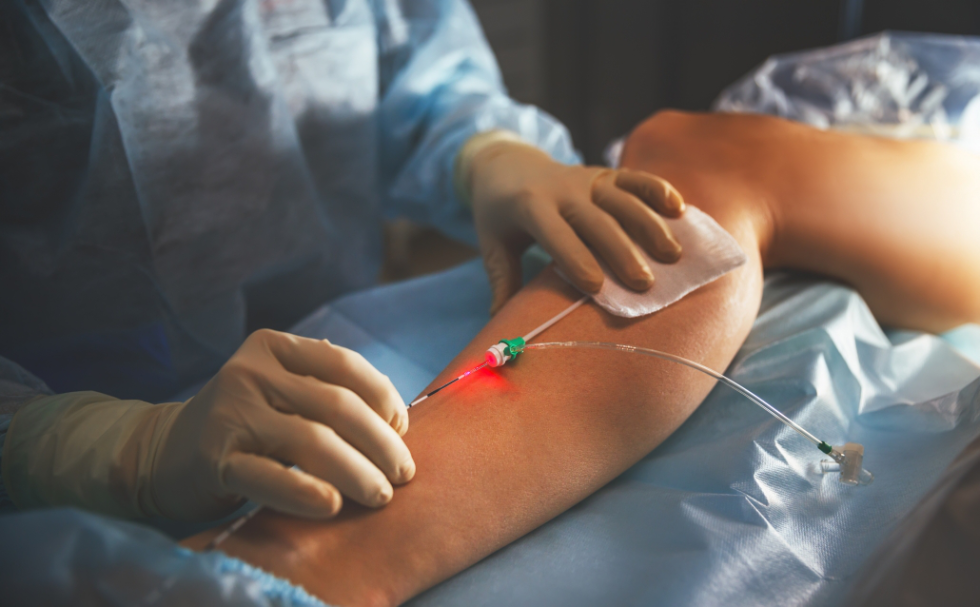
A focused, in office session.
On the day of your laser ablation treatment, you arrive at the clinic wearing loose, comfortable clothing. The procedure is typically performed under local anesthesia, so you remain awake but relaxed.
After cleaning the area, the doctor numbs the skin with lidocaine. A small incision is made to insert a thin catheter into the targeted vein, often guided by ultrasound.
The catheter delivers laser energy to the vein wall, causing it to heat, collapse, and seal shut. The treated vein is gradually absorbed by the body, while healthy veins take over blood flow.

What to do after your treatment.
Most patients return to light activity the same day. The guidance below helps reduce discomfort and supports healthy circulation while the treated vein closes.
- Walk 30 minutes, twice daily, to support circulation
- Mild aching in the treated vein is normal
- Ice packs may help ease soreness
- Anti inflammatory medications such as ibuprofen or naproxen may be used as directed
- Avoid prolonged standing for several days
A thin fiber. A quieter leg.
-
01
Local anesthesia
The skin is numbed with lidocaine. The procedure is performed with local anesthesia, no general anesthesia.
-
02
Catheter placed under ultrasound
A small incision is made and a thin catheter holding a laser fiber is guided into the affected vein with ultrasound.
-
03
Laser energy seals the vein
The laser delivers targeted heat to the vein wall, causing it to collapse and seal shut.
-
04
Body absorbs the closed vein
The treated vein is gradually absorbed by the body. Blood is naturally rerouted through healthier veins.
Why choose Advanced Vascular?
- ·
Minimally invasive. A thin fiber, a small incision, and local anesthesia. No vein stripping.
- ·
Local anesthesia only. You stay awake but relaxed. No general anesthesia.
- ·
Outpatient. Walk in, walk out. Most patients return to light activity the same day.
- ·
Ultrasound guided. The laser fiber is placed under live imaging for accuracy.
- ·
Treats the underlying problem. May help reduce symptoms such as pain, swelling, and skin changes by closing the refluxing vein.
- ·
Performed in the office. Dr. Banerjee is a board certified interventional nephrologist and handles your laser ablation from mapping through follow up.
Before you call.
If you have a question we did not cover, the team is happy to walk you through it on the phone.
Endovenous Laser Ablation (EVLA or EVLT) is a minimally invasive procedure that uses laser energy to treat varicose veins and chronic venous insufficiency (CVI). It works by heating the inside of the diseased vein, causing it to close and be absorbed by the body.
A laser fiber is inserted into the affected vein under ultrasound guidance. Once in place, the laser delivers targeted heat, damaging the vein wall and sealing it shut. Blood is naturally rerouted through healthier veins.
The procedure is done with local anesthesia, so you feel little to no pain. You might feel slight pressure or a warming sensation during treatment.
Laser ablation may be used for varicose veins, chronic venous insufficiency (vein reflux), and symptoms such as leg pain, swelling, heaviness, and skin changes. A consultation and ultrasound can determine whether it is appropriate for you.
Walk 30 minutes twice daily after treatment. This helps ease discomfort and supports circulation. Mild aching in the treated vein is normal and often responds well to walking, ice packs, and anti inflammatory medications such as ibuprofen or naproxen, as directed.
The treated vein is permanently closed, but new varicose veins can form over time. Lifestyle changes and periodic checkups can help reduce the chance of new disease.
Laser ablation
at Advanced Vascular.
Schedule a consultation with Dr. Banerjee. A focused, honest conversation about your options. No pressure.