
May-Thurner Syndrome.
A hidden cause of left leg swelling, pain, and deep vein clots. Diagnosed with ultrasound and venography. Treated with a minimally invasive stent.
- Left legmost commonly affected
- DVTelevated clot risk
- Stentminimally invasive option
- Outpatientno overnight stay
What is May-Thurner syndrome?
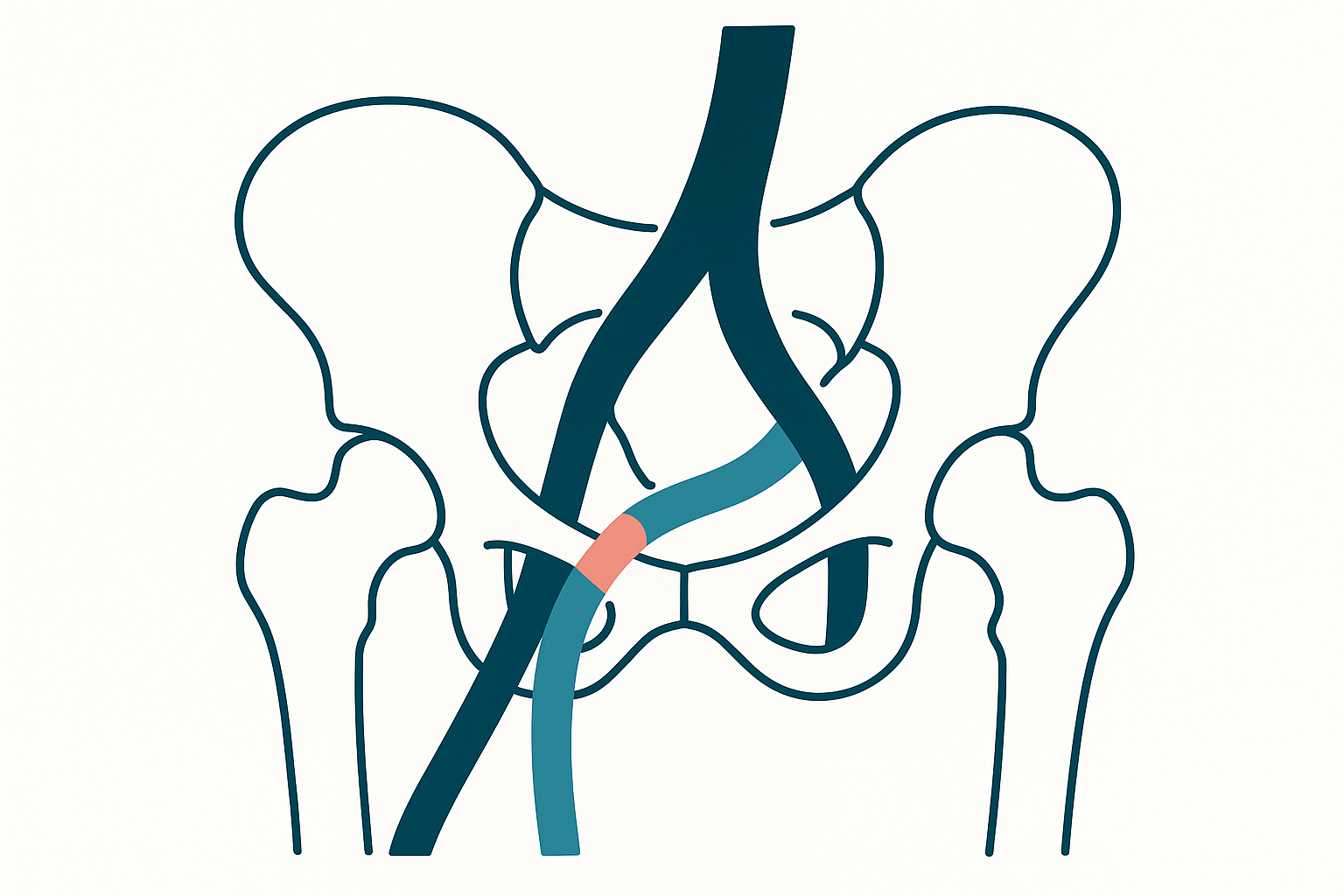
Arteries move oxygen-rich blood to your body from your heart. Veins carry oxygen-poor blood back. Arteries and veins cross each other all over your body without problems. With May-Thurner syndrome, one crossing in the pelvis puts too much pressure on a vein leaving your leg.
May-Thurner syndrome occurs when your right iliac artery presses against your left iliac vein in your pelvis. The right iliac artery sends blood to your right leg. The left iliac vein takes blood from your left leg.
That compression can increase your risk of deep vein thrombosis (DVT) in your left leg, because the artery squeezes the vein and restricts blood flow back to your heart.
Iliac vein compression syndrome and Cockett’s syndrome are other names for May-Thurner syndrome.
Signs of May-Thurner and DVT.
May-Thurner syndrome can cause leg pain or swelling, but symptoms are often rare. Many people do not know they have the condition until they develop a DVT. When DVT does develop, it tends to cause noticeable symptoms in the left leg.
- Cramping pain
- Changes in skin color
- Enlarged or visible veins
- Heaviness
- Tenderness
- Throbbing
- Swelling
- Warmth
A rare quirk of pelvic anatomy.
The right iliac artery and the left iliac vein cross each other in the pelvis in everyone. Not everyone develops May-Thurner syndrome. It is a relatively rare venous condition, unrelated to genetics, and develops randomly.
On its own, a DVT is not life-threatening. The concern is that the clot could break off and travel to your lungs, causing a pulmonary embolism (PE). A PE is life-threatening and requires immediate medical care.
If May-Thurner syndrome is suspected, evaluation usually starts with a focused history, a physical exam, and a duplex ultrasound. From there, additional imaging such as venography may be used to confirm compression of the left iliac vein.
How we treat it.
If you are diagnosed with May-Thurner syndrome, the team at Advanced Vascular develops a plan that addresses any existing clots and reduces your risk of developing more. Most options are minimally invasive and performed on an outpatient basis.
-
01
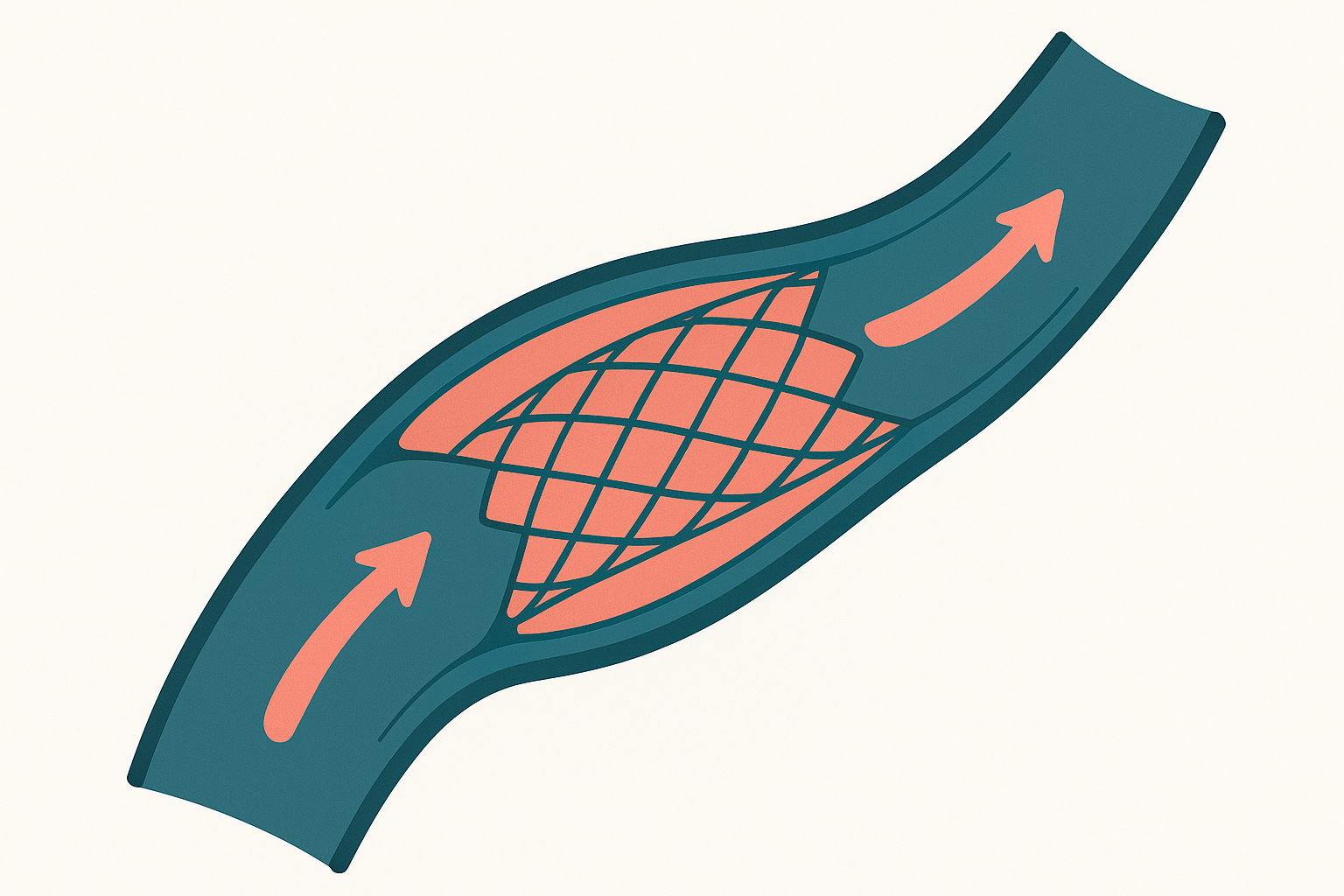
Angioplasty and stent
A small balloon expands the left iliac vein, then a stent holds it open so blood can flow normally.
-
02
Blood thinning medication
Anticoagulant medication reduces clot risk and helps manage an existing DVT under medical supervision.
-
03
Compression therapy
Graduated compression socks support healthy circulation in the legs and ease swelling and heaviness.
-
04
Other venous procedures
In select cases, additional minimally invasive venous procedures may be recommended alongside stenting.
Why choose Advanced Vascular?
- ·
Lower DVT risk. Relieving compression of the left iliac vein can reduce the risk of recurrent clots.
- ·
Less leg swelling. Many patients notice less heaviness and swelling in the affected leg once blood flow improves.
- ·
Minimally invasive. Stent placement is typically done through a small access point, with no large incisions.
- ·
Outpatient care. Most patients are evaluated and treated without an overnight hospital stay.
- ·
A clear plan. Dr. Banerjee walks you through your imaging, your options, and what to expect at each step.
- ·
Evaluated by a specialist. May Thurner is easy to miss on a standard workup. Dr. Banerjee is a board certified interventional nephrologist who looks for it specifically.
Frequently asked questions.
If you have a question we did not cover, the team is happy to walk you through it on the phone.
May-Thurner syndrome happens when the right iliac artery presses on the left iliac vein in the pelvis. That pressure can slow blood flow out of the left leg and raise the risk of deep vein thrombosis.
Symptoms are often rare. When they appear, they typically show up in the left leg as cramping pain, swelling, heaviness, tenderness, throbbing, warmth, skin color changes, or enlarged veins. Many people only discover the condition after developing a DVT.
Evaluation usually begins with a physical exam and a duplex ultrasound to assess blood flow. Additional imaging such as venography may be used to confirm compression of the left iliac vein.
Not everyone with iliac vein compression needs a procedure. Treatment is considered when there are symptoms, a documented DVT, or imaging suggests significant compression. Dr. Banerjee reviews your imaging with you and explains which options fit your situation.
A common option is angioplasty with a stent, which opens the compressed vein and holds it open so blood can flow normally. Other care may include blood thinning medication, compression socks, or additional venous procedures.
Yes. May-Thurner syndrome can increase the risk of deep vein thrombosis in the left leg. A clot that breaks loose can travel to the lungs and cause a pulmonary embolism, which is a medical emergency. Sudden chest pain, shortness of breath, or coughing up blood needs immediate care.
May-Thurner care
at Advanced Vascular.
Schedule a consultation with Dr. Banerjee. A focused, honest conversation about your imaging and your options. No pressure.