Venous ulcer treatment in Albuquerque.
Open sores on the lower leg or ankle from chronic venous disease. We treat the underlying vein problem so the ulcer can finally heal.
- Most commontype of leg ulcer
- Root causevenous hypertension
- Outpatientvein treatment
- Better healingwhen reflux is closed
What are venous ulcers?
Venous ulcers, also called venous stasis ulcers, are open sores that usually appear on the lower legs or ankles. They are the most common type of leg ulcer and a sign that a deeper vein problem needs attention.
They are caused by poor circulation in the leg veins. When blood pools and pressure builds up, it damages the skin and underlying tissue, eventually leading to an open wound that struggles to close on its own.
Venous ulcers most often appear:
- Above the ankle, usually on the inner side
- On the lower calf
- Rarely on the foot or higher up the leg unless the disease is advanced
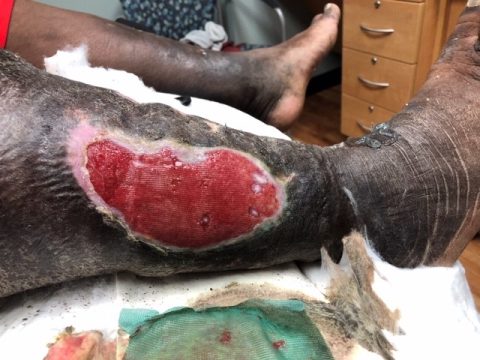
Signs of a venous ulcer.
Venous ulcers tend to come on slowly and can be mistaken for stubborn wounds that just will not heal. If you recognize several of these signs, the underlying veins likely need to be evaluated.
- Open wound with uneven edges
- Shallow sore that may ooze or drain fluid
- Skin discoloration (dark brown, purple, or red patches)
- Itching or burning around the sore
- Thick, hardened skin around the ulcer
- Swelling in the lower leg
- Pain, often worse when standing
- Foul odor if the ulcer becomes infected
It starts with venous hypertension.
Venous ulcers form when the veins fail to push blood back toward the heart efficiently. Blood pools, pressure builds, and over time the skin breaks down. The medical term for the underlying problem is chronic venous insufficiency.
Damaged or weakened valves let blood flow back down the leg instead of upward. That constant pressure injures the smallest blood vessels and the surrounding skin, which is why ulcers tend to keep returning when the vein problem is not addressed.
Common risk factors include:
- Varicose veins, a major risk factor
- Past deep vein thrombosis, which can damage valves
- Obesity, which raises leg vein pressure
- Aging, as vein walls weaken over time
- Prolonged standing or sitting
- Prior leg injuries or trauma to the veins

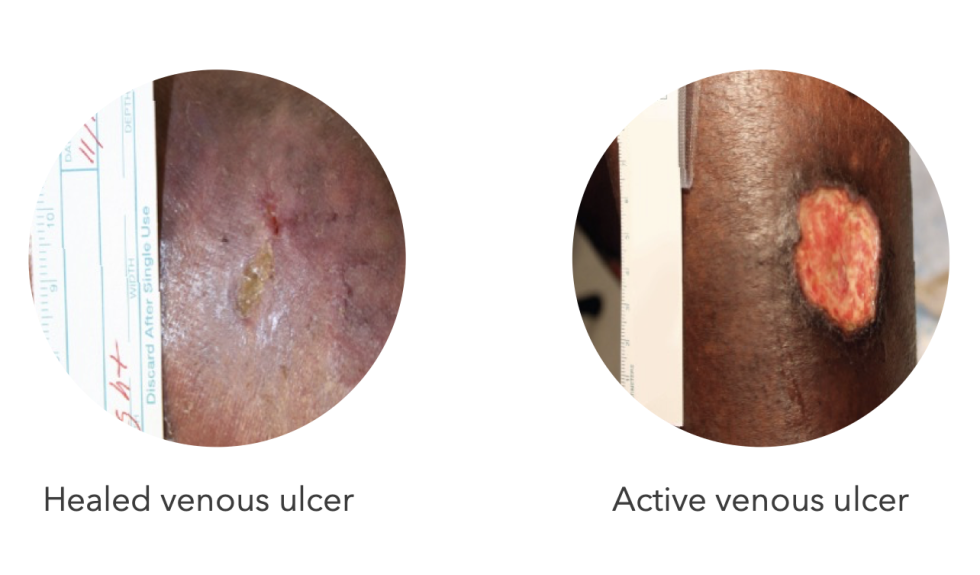
Healed vs active venous ulcer.
A venous ulcer can present as an open wound or as a healed area of pigmented, fragile skin. Either pattern points to ongoing venous disease underneath.
How long does a venous ulcer take to heal?
This is the first question almost every patient asks, usually after a year of dressings. The honest answer is that it depends on how long the wound has been open, how large it is and whether infection is involved. Here is what the process actually looks like.
- ·
Treatment day is short. Vein closure is performed in the office under local anesthesia and typically takes under an hour. No hospital stay, and no general anesthesia in most cases. You walk out on your own.
- ·
Discomfort is usually mild. Most patients describe a pinch while the area is numbed, then soreness or bruising along the treated vein for a week or two. Over the counter pain relief is usually enough.
- ·
Walking starts the same day. Movement helps the calf muscle pump push blood back toward the heart. Most people return to desk work within a day or two, and Dr. Banerjee will tell you when it is appropriate to resume heavier lifting and exercise.
- ·
Compression continues after the procedure. Prescription compression stockings are part of the treatment, not an optional extra. They control the swelling that keeps the skin from closing.
- ·
The wound closes over weeks, not days. Many venous ulcers close within several weeks to a few months once the underlying reflux is treated. Larger or long standing wounds can take longer, and some need ongoing wound care alongside the vein work.
- ·
Recurrence drops when the cause is treated. Ulcers that are only dressed have a habit of returning, because the venous hypertension driving them never went away. Treating the vein disease targets that cause, which is why we look at varicose veins and venous stasis dermatitis in the same visit.
How we help ulcers heal.
Wound care and compression are important, but they do not address why the ulcer formed in the first place. Closing the faulty veins reduces the pressure that caused the wound, improves circulation, and gives the ulcer a real chance to heal. It also helps prevent new ones.
-
01
Radiofrequency Ablation
Heat seals the diseased vein from the inside. Outpatient, local anesthesia, walk in and walk out.
-
02
Varithena
A microfoam medication closes the faulty vein. No incisions and minimal recovery time.
-
03
VenaSeal
A medical adhesive seals the vein. No heat and no tumescent anesthesia. Typically twenty to forty minutes.
-
04
Laser Ablation
Endovenous laser energy closes the refluxing vein that is keeping the ulcer open. Outpatient, under local anesthesia.
What happens at your first visit.
Most people arrive after months of dressings that never quite got the wound closed. The visit is built to answer one question. Is a vein problem holding this ulcer open?
-
01
We take the history of the leg.
How long the ulcer has been open, what has already been tried, and the skin changes around it. Bring your current dressing routine and a list of your medications.
-
02
Duplex ultrasound in the office.
A non-invasive scan maps blood flow in your leg veins and shows which valves are leaking. Nothing is injected, and the study usually takes 30 to 45 minutes.
-
03
You see the findings the same day.
Dr. Satyaki Banerjee, a board-certified interventional nephrologist and ASDIN-certified vascular access specialist, walks you through the images on screen and explains in plain language whether chronic venous insufficiency is feeding the wound.
-
04
A written plan, then a benefits check.
If treatment is appropriate you leave with the plan in writing. Our team verifies your insurance benefits and handles any prior authorization before anything is scheduled. You can also see how vein treatment works before you come in.
Does insurance cover venous ulcer treatment?
A venous ulcer is a medical problem, not a cosmetic one. That distinction is the reason most plans cover the vein work behind the wound, and it is the first thing we sort out for you.
- ·
Medical, not cosmetic. Closing the refluxing vein that keeps an ulcer open is medically necessary care. Medicare and most major carriers cover it when the documentation supports it.
- ·
Compression usually comes first. Many plans require a documented trial of compression therapy, often 6 to 12 weeks, before they will approve vein closure. That clock only starts once someone documents it, which is a good reason to have the leg evaluated sooner rather than later.
- ·
The ultrasound is the documentation. Insurers want a duplex study showing reflux, along with vein measurements and a record of the wound. All of it is done here in our Albuquerque office, so nothing gets sent out and delayed.
- ·
We verify before we schedule. Our team checks your benefits, submits prior authorization where it is required, and tells you what your deductible and coinsurance look like before a procedure is booked.
- ·
What you pay depends on your plan. There is no single price for venous ulcer care, because it is billed through your insurance rather than sold as a package. Your out of pocket cost comes down to your deductible, your coinsurance and how much of it you have already met this year.
- ·
Referrals vary. Some plans, HMO plans in particular, want a referral from your primary care provider. Many do not. Call the office and our team will confirm which applies to you.
- Aetna
- Blue Cross Blue Shield
- Cigna
- Medicare
- Medicaid
- Presbyterian Health Plan
- UnitedHealthcare
Why choose Advanced Vascular?
- ·
Reduces venous pressure. Closing the faulty vein takes the load off the skin and tissue around the wound.
- ·
Improves circulation. Healthy veins carry blood back toward the heart so the leg can heal.
- ·
Better odds of healing. Many ulcers that resisted dressings alone close once the reflux is addressed.
- ·
Prevents recurrence. Treating the underlying disease lowers the chance of new ulcers forming.
- ·
Insurance often covers it. Medically necessary vein treatment is covered by Medicare and most major insurance.
Common questions about venous ulcers.
If you have a question we did not cover, the team is happy to walk you through it on the phone.
A venous ulcer is a chronic wound that usually develops on the lower leg or ankle due to poor blood circulation from damaged veins. They are often slow to heal and tend to recur if the underlying vein problem is not managed.
Venous ulcers are typically caused by chronic venous insufficiency, where the leg veins fail to return blood to the heart efficiently. Pressure builds up in the veins, which damages the skin and surrounding tissue.
Pain, itching, or swelling in the affected area. Skin discoloration or darkening, usually around the ankle. An open wound with uneven edges and possible discharge. Hardened or leathery skin near the ulcer.
Diagnosis usually involves a physical exam, a detailed medical history, and a duplex ultrasound to assess blood flow and check for valve dysfunction or prior clots.
Healing time varies and may take several weeks to months depending on the severity and how well treatment is followed. Early evaluation and addressing the underlying vein disease improve outcomes.
In most cases yes. A venous ulcer is a medical condition, not a cosmetic concern, so Medicare and most major carriers cover treatment of the underlying vein disease when the documentation supports it. Many plans first require a documented trial of compression therapy, often 6 to 12 weeks. Our team verifies your benefits and handles prior authorization before anything is scheduled.
There is no single price, because this care is billed through your insurance rather than sold as a package. Your out of pocket cost depends on your deductible, your coinsurance and how much of it you have already met this year. We verify your benefits and give you those numbers before you decide on treatment.
Some plans, HMO plans in particular, require a referral from your primary care provider. Many do not. If you are not sure, call the office and our team will check your plan before your appointment.
Vein closure is performed under local anesthesia. Most patients describe a pinch while the area is numbed and a sense of pressure during the procedure, then soreness or bruising along the treated vein for a week or two. Over the counter pain relief is usually enough.
Walking is encouraged the same day, and most people return to desk work within a day or two. Prescription compression stockings are worn afterward as part of the treatment. Dr. Banerjee will tell you when it is appropriate to resume heavier lifting and exercise.
Compression and good wound care can help a venous ulcer close, and they remain an important part of the plan. The issue is recurrence. If the venous hypertension underneath is never addressed, ulcers commonly return in the same spot. Treating the failing vein targets the cause rather than the wound alone.
Yes. Patients travel to the Albuquerque office from Rio Rancho, Bernalillo, Corrales and Los Lunas. The ultrasound and the treatment are performed in the same office, so most of the evaluation is completed in a single visit.
Venous ulcer care for Albuquerque and the metro.
Leg wound care in New Mexico is often split between a dressing clinic and a vein specialist, which means months can pass before anyone looks at the veins.
Our office sits at 4501 Osuna Road NE in northeast Albuquerque, and patients drive in from Rio Rancho, Bernalillo, Corrales and Los Lunas. The ultrasound, the reading of that ultrasound and the procedure itself all happen in the same office, so the evaluation is finished in one visit instead of three.
If the leg also aches, swells or feels heavy by the end of the day, that is part of the same picture. Read more about leg pain, cramping and swelling, or about the radiofrequency ablation procedure most often used to close the vein behind an ulcer.
Venous ulcer care
at Advanced Vascular.
Schedule a consultation with Dr. Banerjee. We will evaluate the underlying veins and walk you through the options. No pressure.