
Leg itching and burning.
Itchy, burning, or tingling legs are often more than dry skin. They can be an early sign of vein disease. Dr. Banerjee diagnoses the cause and builds a plan to ease the discomfort.
- Oftenlinked to vein disease
- Duplexultrasound to confirm
- Worseafter standing or walking
- Treatablewhen veins are the cause
Itchy, burning legs explained.
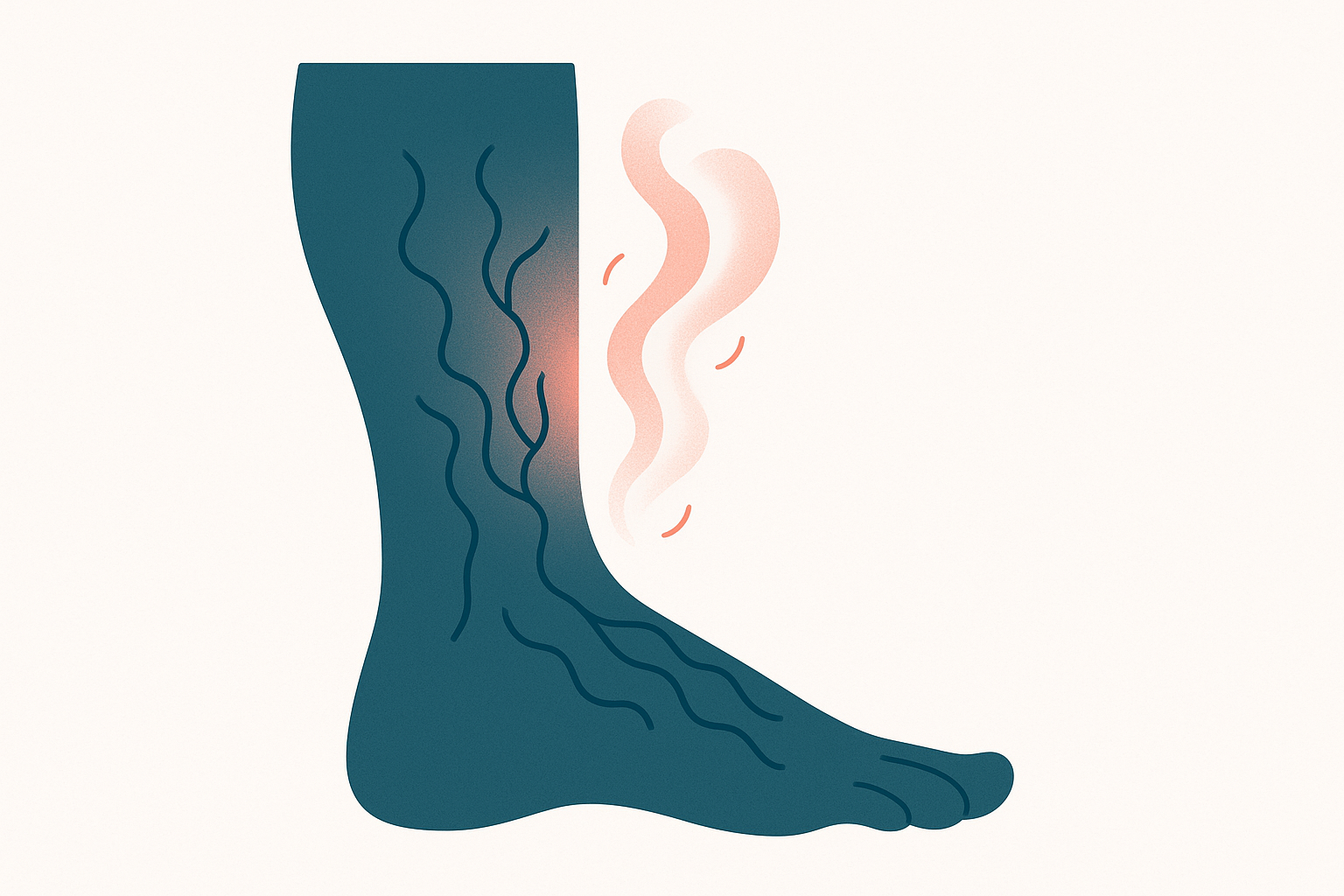
Itching and burning in the legs can come from dry skin, allergic reactions, or nerve issues. In many cases though, the root cause is poor circulation. When blood flow stalls in the legs, the surrounding tissue gets irritated and inflamed, and the sensations follow.
When the valves in your leg veins do not close properly, blood pools in the lower legs instead of returning to the heart. Pressure builds, fluid leaks into the surrounding tissue, and the skin reacts. That irritation is what you feel as itching, burning, or a crawling sensation.
You may notice other symptoms alongside the discomfort:
- Tingling or numbness
- A heavy or tired feeling in the legs
- Swelling that worsens through the day
- Cramping in the lower legs at night
- Symptoms that flare after long periods of standing or walking

When itchy legs warrant a closer look.
Most itching and burning is mild. But when it shows up next to swelling, heaviness, or visible veins, it can point to chronic venous insufficiency or another underlying condition, particularly once skin pigmentation changes appear around the ankle. We cover the walking-related pattern in more depth in why your legs itch and burn when you walk. Schedule an evaluation if you notice any of the following.
- Swelling in the legs, ankles, or feet
- Cramping in the lower legs
- A heavy, tired, or fatigued feeling
- Visible varicose or bulging veins
- Brown or reddish skin discoloration
- Personal or family history of vein disease
- Symptoms that worsen after standing or walking
- Open sores or non healing wounds on the legs
Finding the actual cause.
Itchy, burning legs have many possible causes. Pinpointing the right one matters because the treatment is different for each. Advanced Vascular runs a focused exam to figure out whether your veins are involved.
Dr. Banerjee starts with your medical history, symptoms, and lifestyle. He examines the legs for signs of inflammation, swelling, varicose veins, or skin changes.
If vein disease is suspected, a duplex ultrasound is the gold standard. It is painless, noninvasive, and shows blood flow and valve function in real time. That image tells us if reflux is the reason your legs feel the way they do.
If the cause is not venous, we point you toward the right care. If it is, we move into a treatment plan tailored to you.
Easing the symptoms at the source.
When vein disease is the driver, treating the underlying vein is what brings relief. We start with conservative measures and move to minimally invasive procedures when those are not enough. Every plan is built around your exam, your ultrasound, and your day to day life.
-
01
Compression and lifestyle
Compression stockings, elevation, movement, and weight management can calm symptoms early in the disease.
-
02
Radiofrequency Ablation
Heat closes the diseased vein. Outpatient, local anesthesia, walk in walk out.
-
03
VenaSeal
Medical adhesive seals the vein. No heat. No tumescent anesthesia. Twenty to forty minutes.
-
04
Sclerotherapy
An injectable foam closes the vein from the inside. Used alone or alongside other procedures.
Why choose Advanced Vascular?
- ·
Relief from daily discomfort. Patients often report less itching, burning, heaviness, and night cramping after treatment.
- ·
Catch vein disease early. Itching and burning can show up before visible veins or open sores. Addressing it early lowers the chance of progression.
- ·
Protect the skin. Treating reflux reduces the risk of skin changes, venous stasis dermatitis, and ulcers down the line.
- ·
Quick recovery. Most patients return to normal activity within 24 to 48 hours of a procedure.
- ·
Insurance often covers it. Medically necessary vein treatment is covered by Medicare and most major insurance plans.
- ·
Assessed by a specialist. Itching and burning are frequently treated as a skin problem. Dr. Satyaki Banerjee evaluates the veins underneath.
Frequently asked questions.
If you have a question we did not cover, the team is happy to walk you through it on the phone.
Common causes include dry skin, allergic reactions, nerve issues, and circulation problems. In many of the patients we see, the underlying driver is chronic venous insufficiency. Blood pools in the lower legs, fluid leaks into the tissue, and the irritation feels like itching, burning, or a crawling sensation.
Schedule an evaluation if the itching or burning is persistent, if it gets worse after standing or walking, or if it comes with swelling, cramping, heaviness, visible veins, skin discoloration, or open sores. A personal or family history of vein disease is another reason to get checked.
We review your history, examine the legs for swelling and inflammation, and use a duplex ultrasound to look at blood flow and valve function. The ultrasound is the key test for confirming whether vein disease is involved.
When veins are the cause, options include compression stockings, lifestyle adjustments, radiofrequency ablation, VenaSeal, and ultrasound guided sclerotherapy. Dr. Banerjee chooses the right combination based on your ultrasound findings and your goals.
Stop the itch.
Book an evaluation with Dr. Banerjee. A duplex ultrasound and a clear answer on whether your veins are part of the story.