
Venous Stasis Dermatitis.
Brown or red discoloration, itching, and thickening of the lower leg skin is often a sign of underlying vein disease. We treat the cause, not just the rash.
- Late stageof chronic vein disease
- Treatablewhen caught early
- Outpatientvein procedures
- Ulcer riskrises without care
What is venous stasis dermatitis?
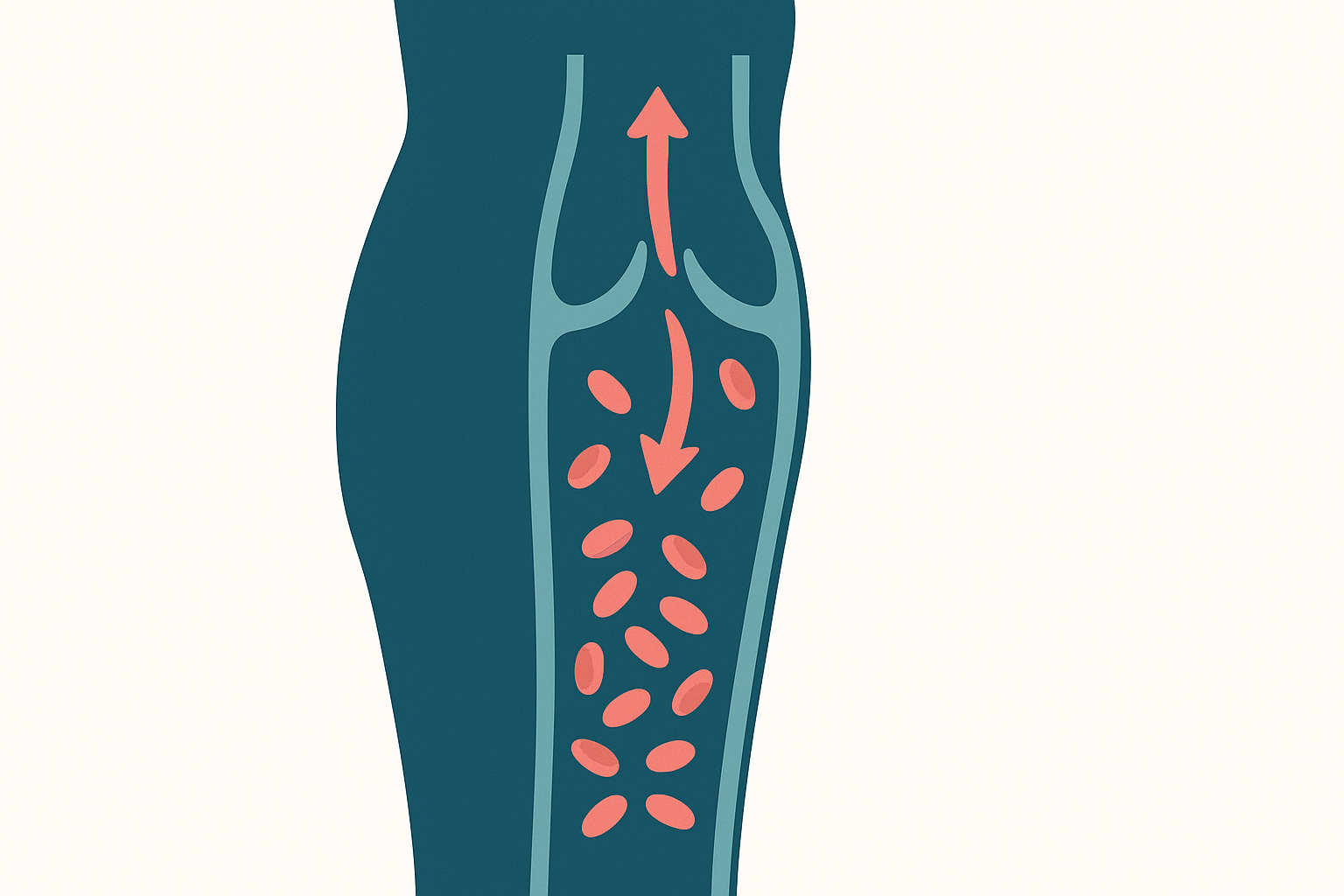
Venous stasis dermatitis is a late stage of chronic venous disease. When weak vein valves let blood pool in the lower legs, pressure builds in the skin and the surface tissue starts to change.
The condition usually follows a predictable progression. It starts quietly, with valve failure inside the veins, then moves to symptoms you can feel, then to changes you can see on the skin.
- Venous reflux, often without any early warning signs
- Leg heaviness, aching, and fatigue that worsens with standing
- Swelling around the ankle and lower leg, especially at end of day
- Skin changes, including the dermatitis itself
- Brown discoloration from hemosiderin staining
- Eczema like rash and lipodermatosclerosis
- Venous ulcers, typically around the medial ankle
Without treatment of the underlying vein disease, this condition tends to get worse, not better. That is why we focus on the cause rather than only the rash.
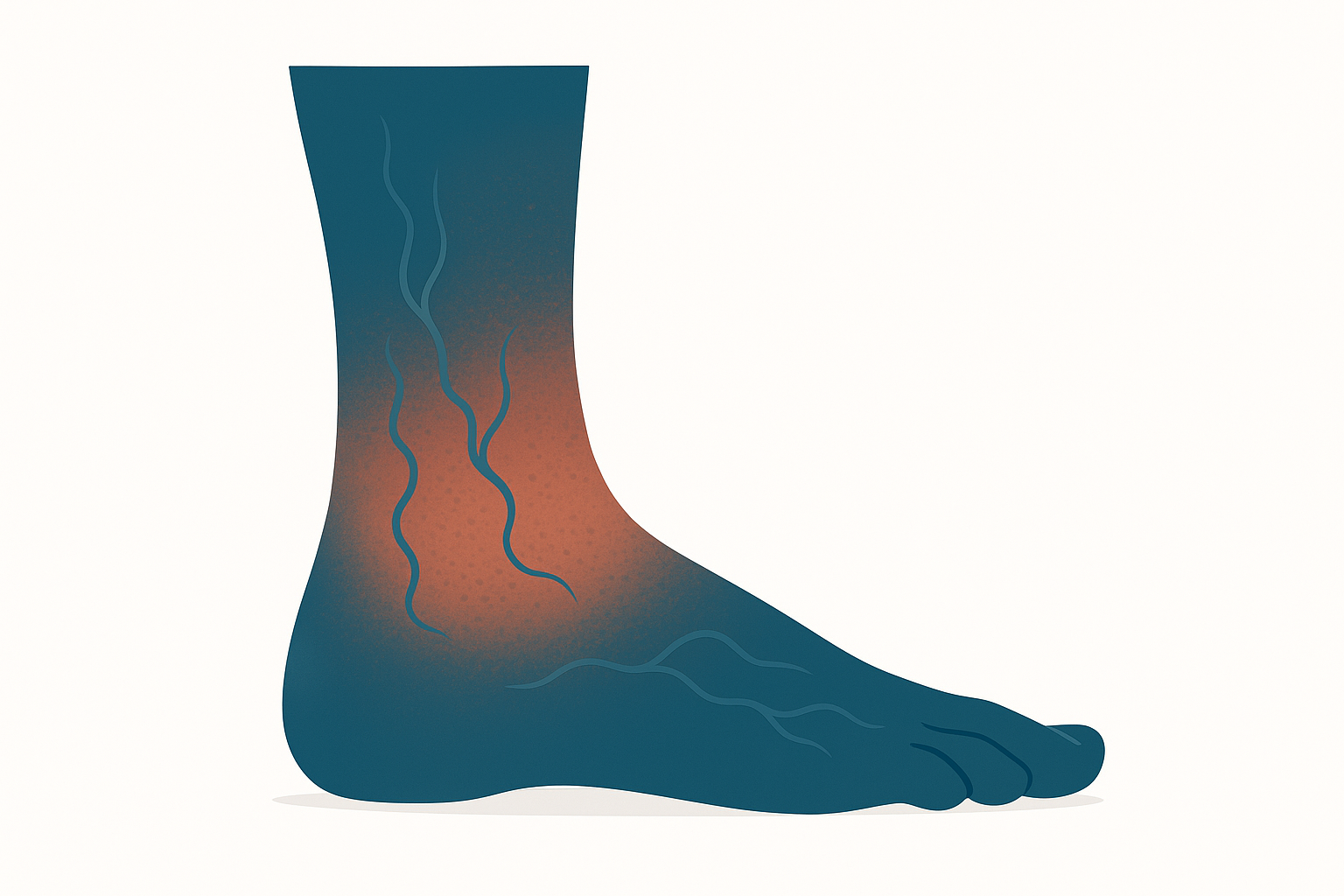
What it looks like.
Early signs are easy to dismiss as dry skin or eczema, but the pattern is specific. It tends to show up around the ankle and lower calf and gets worse the longer you stand. If you notice these signs, get evaluated. Untreated, the condition can progress to open venous ulcers, and the brown staining that comes with it is the same process behind skin pigmentation changes.
- Brown or red discoloration of the lower leg
- Flaky or scaly skin
- Shiny, stretched skin
- Thickened skin that feels firm to the touch
- Skin scarring or hardening near the ankle
- Itching, burning, or persistent rash
When circulation shows in skin.
Venous stasis dermatitis is what happens when chronic venous insufficiency goes unaddressed. Blood and fluid back up in the lower leg, pressure builds, and the skin pays the price.
This condition most often affects adults over fifty with poor circulation and is more common in women. Several factors raise the risk.
- High blood pressure
- Excess weight or obesity
- Multiple pregnancies
- Congestive heart failure
- Kidney failure
- A history of deep vein thrombosis or blood clots in the legs
Anything that increases pressure inside the veins of the leg, or that damages the deep venous system, makes venous stasis dermatitis more likely. A duplex ultrasound is usually the first step in figuring out which veins are involved.
How we treat venous stasis dermatitis.
Effective care focuses on the underlying vein disease. Compression, leg elevation, and skin care help with comfort, but they do not fix the failing vein. Closing the diseased vein restores normal pressure in the lower leg, and the skin has a chance to recover.
-
01
Radiofrequency Ablation
Radiofrequency energy collapses the affected vein and redirects blood to healthier ones. Outpatient, local anesthesia.
-
02
VenaSeal
A medical adhesive seals the diseased vein and reroutes blood to healthy veins. No heat, no tumescent anesthesia.
-
03
Ultrasound guided sclerotherapy
A foam medication is injected under ultrasound guidance. The vein wall reacts, the vein closes, and the body absorbs it.
Why choose Advanced Vascular?
- ·
Stop the progression to ulcers. Untreated venous stasis dermatitis is the most common path to chronic venous leg ulcers.
- ·
Calm the itch, the burn, and the rash. Treating the cause settles the skin in a way that creams alone cannot, which is why we evaluate leg itching and burning as a circulation problem first.
- ·
Reduce swelling and heaviness. When the diseased vein is closed, the lower leg drains the way it should.
- ·
Protect skin from permanent change. Pigment changes and skin hardening can become permanent if the underlying pressure is not addressed.
- ·
Often covered by insurance. Medically necessary vein treatment is typically covered by Medicare and most major insurance.
- ·
Minimally invasive. Outpatient procedures, local anesthesia, most patients walk in and walk out.
- ·
Treated at the source. Dr. Satyaki Banerjee is a board certified interventional nephrologist who treats the underlying reflux, not only the skin.
Frequently asked questions.
If you have a question we did not cover, the team is happy to walk you through it on the phone.
It can look similar, but the cause is different. Regular eczema is a skin condition. Venous stasis dermatitis is driven by chronic venous disease in the deeper leg veins, so treatment that ignores the veins rarely solves the problem.
Early changes such as itching, redness, and mild swelling often improve once the underlying vein is treated. Long standing pigmentation and hardened tissue may fade only partially. Individual results vary.
We start with a physical exam and a focused history. Most patients also get a duplex ultrasound of the leg veins so we can see which veins are leaking and how severe the reflux is.
Untreated venous stasis dermatitis tends to progress. The skin gets thicker and more discolored, and many patients eventually develop venous ulcers around the ankle. Catching it early gives the skin the best chance to recover.
Dermatitis care
at Advanced Vascular.
Schedule a consultation with Dr. Banerjee. We look at the skin, scan the veins, and lay out what treatment would actually help. No pressure.