Restless Leg Syndrome.
When vein disease is the cause, treating the underlying veins can quiet the legs at night. Board certified evaluation in Albuquerque.
- Oftenvein related
- Treatablewhen veins are the cause
- Minimallyinvasive procedures
- Bettersleep, quieter nights
What is restless legs syndrome?
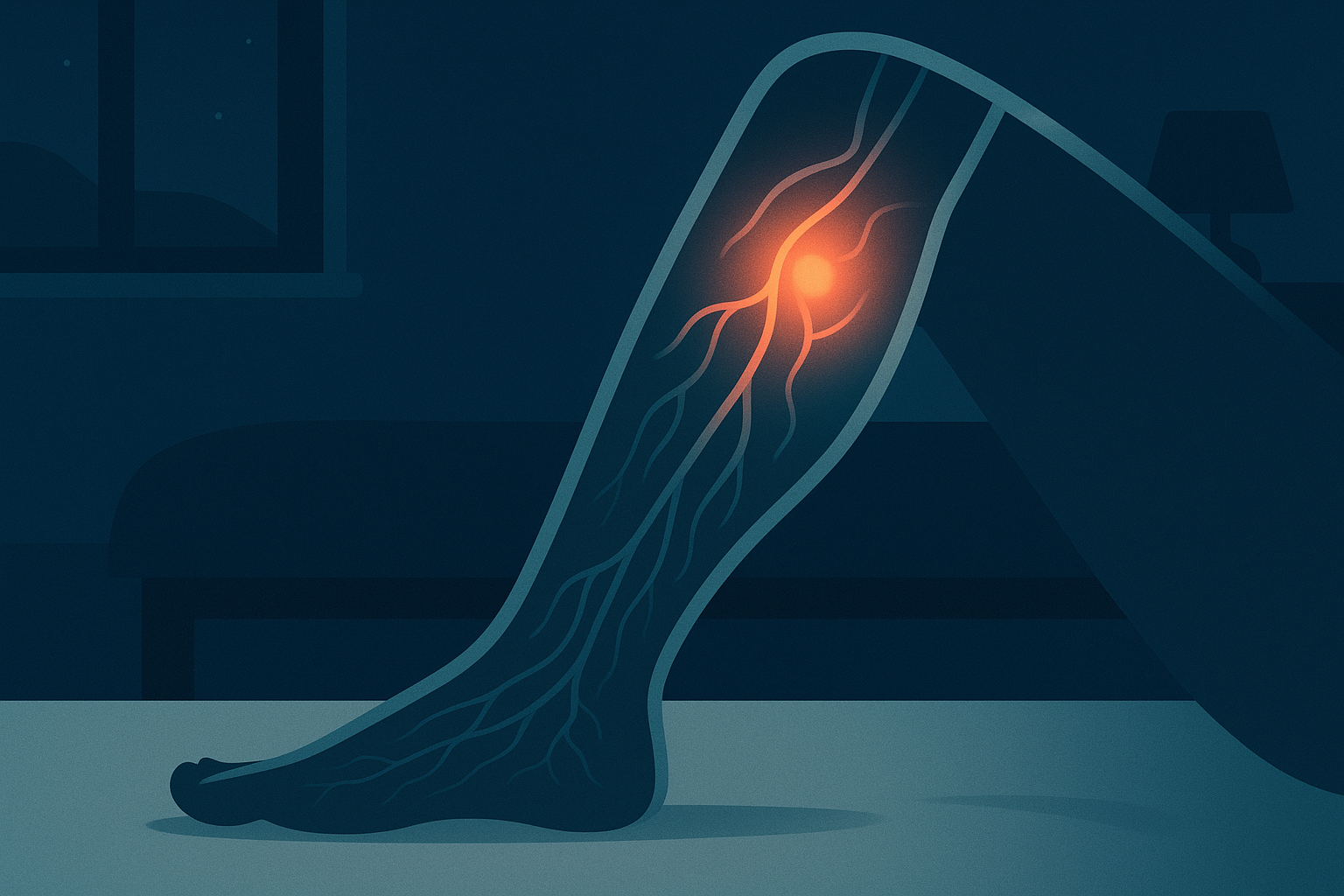
Restless legs syndrome (RLS) is a condition where uncomfortable sensations in your legs are only relieved by moving or massaging them. Multiple factors can play a role, including vein disease.
Vein problems can irritate and inflame the muscles and soft tissues in your legs, potentially producing the sensations associated with RLS. Treating the underlying veins can ease those nightly urges to move.
Common sensations patients describe include:
- Creeping or crawling feelings
- Tingling or pins and needles
- Aching or throbbing pain
- Electrical shock like sensations
- An overwhelming urge to move the legs

When the nights start to wear on you.
Symptoms typically worsen in the evening or at night, especially when you are relaxing or trying to sleep. Over time, lost sleep can lead to daytime fatigue, irritability, and broader health issues. If sleep is suffering, it is worth a conversation.
- Creeping, crawling, tingling sensations
- Aching or throbbing leg pain
- Symptoms worse at rest or at night
- Strong urge to move the legs
- Disrupted sleep, daytime fatigue
- Irritability from poor sleep
Your legs may be telling you.
RLS has several possible drivers. In many patients, underlying venous disease is contributing. Identifying that early changes the treatment plan.
Even if you do not see other signs of vein disease, RLS symptoms that disrupt your sleep deserve a proper look. Delaying evaluation can prolong the discomfort and the broken sleep that comes with it.
To work out whether vein disease is involved, our team typically evaluates:
- Whether symptoms worsen during rest
- Whether movement provides relief
- Whether severity increases at night
- Your medical history and lifestyle
- Physical exam findings for vein disease
- Vascular ultrasound when appropriate, to check for chronic venous insufficiency or deep vein thrombosis
How we treat vein driven RLS.
If vein disease is contributing to your RLS, we build a personalized plan to improve vascular health and quiet the legs. Conservative steps first, then minimally invasive procedures when they are appropriate.
-
01
Compression and lifestyle
Compression stockings, movement, weight management, and other adjustments to reduce symptoms.
-
02
Radiofrequency Ablation
Heat closes the diseased vein. Outpatient, local anesthesia, most patients walk in and walk out.
-
03
VenaSeal
A medical adhesive seals the vein. No heat. No tumescent anesthesia. Twenty to forty minutes.
-
04
Sclerotherapy
An injectable agent closes the vein from the inside. Used alone or alongside other procedures.
-
04
Laser Ablation
Endovenous laser energy closes the refluxing vein driving the night-time symptoms. Outpatient, local anesthesia.
Why choose Advanced Vascular?
- ·
Quieter nights. Less urge to move, fewer disrupted hours, better sleep quality.
- ·
Treat the root cause. When vein disease is driving symptoms, addressing the veins changes the picture.
- ·
Daytime energy back. Better sleep tends to reduce fatigue, irritability, and brain fog.
- ·
Insurance often covers it. Medically necessary vein treatments are covered by Medicare and most major insurance.
- ·
Minimally invasive options. Outpatient procedures, local anesthesia, short recovery.
- ·
Seen by a vein specialist. Restless legs are often dismissed as a sleep issue. Dr. Satyaki Banerjee, MD, FASN checks whether venous reflux is driving the symptoms.
Frequently asked questions.
If you have a question we did not cover, the team is happy to walk you through it on the phone.
Symptoms can vary, but they often include creeping, crawling, or tingling sensations, along with aching or throbbing pain. Some patients describe a tingling or electrical shock like feeling. Symptoms typically worsen in the evening or at night when you are relaxing or trying to sleep, which can disrupt sleep and lead to daytime fatigue.
Even if you do not notice other signs of vein disease, our team can help. If RLS symptoms are disrupting your sleep and affecting your daily life, schedule an appointment. Delaying diagnosis and treatment may prolong your discomfort.
We review your medical history, symptoms, and lifestyle, and perform a physical exam looking for signs of vein disease. A vascular ultrasound may be used to check for issues like chronic venous insufficiency or deep vein thrombosis. We look at whether symptoms worsen at rest, ease with movement, and intensify at night.
When vein disease is contributing to your RLS, we develop personalized treatment plans to improve your vascular health and ease symptoms. Options can include compression stockings, lifestyle changes, radiofrequency vein ablation, VenaSeal, and sclerotherapy.
RLS care
at Advanced Vascular.
Schedule a consultation with Dr. Banerjee. A focused, honest conversation about whether your restless legs may be vein related. No pressure.